Missing instrument visibility
Discrepancies may be difficult to identify as instruments move between handling points.
Establish visibility after OR procedures, strengthen instrument accountability and add inspection capability before the CSSD cycle.
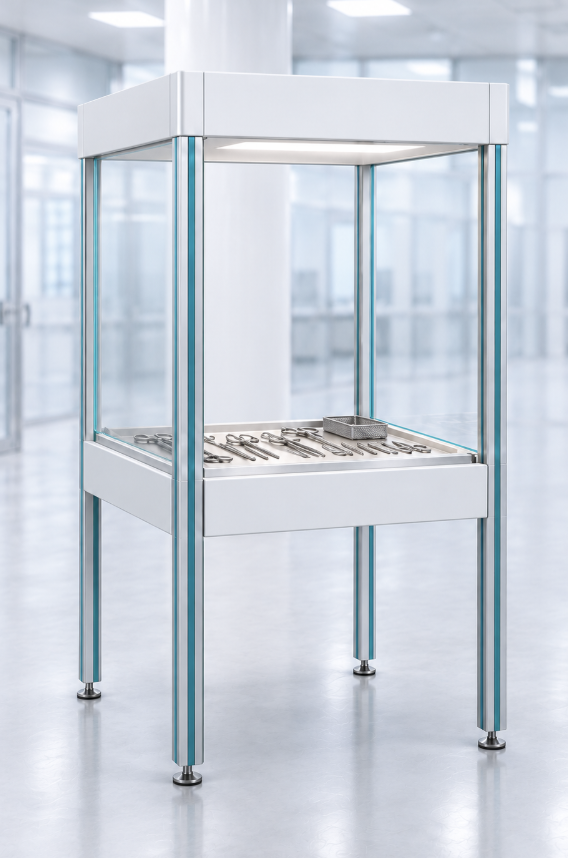
After an OR procedure, instruments move through several handling points before CSSD reprocessing begins. Hospitals may face:
Discrepancies may be difficult to identify as instruments move between handling points.
Teams rely on repeated checks before instruments enter reprocessing.
A clearer record can help teams establish what was returned and when.
Issues may become apparent only further into the workflow.
Photographic or digital evidence may be limited at handover.
RS2D is a front-end accountability solution used after OR procedures, before instruments enter the CSSD workflow. It provides an accessible entry point with low cost of ownership and minimal integration requirements.
Capture a visual record of returned instruments before reprocessing.
Strengthen instrument accountability between teams.
Reduce reliance on manual memory and identify issues earlier.
Follow the instrument journey from the operating theatre through inspection, packing, sterilisation and sterile storage.
A standalone entry option for fast deployment and simple adoption.
PLACE & USEDiscuss Base ↗Selected integration capability while keeping implementation light.
LIGHT IMPLEMENTATIONDiscuss Standard ↗For hospitals ready to connect RS2D more deeply into their workflow.
FULL INTEGRATIONDiscuss Full ↗Establish the instrument accountability layer before CSSD.
All RS2D functions, with additional full instrument inspection capabilities.
Start with accountability through RS2D. Upgrade to deeper inspection capability with RS3D.
RS2D is designed for use after OR procedures, before instruments enter the CSSD cycle.
Choose according to the depth of integration your workflow requires, from standalone Base to Standard or Full. Discuss your current handover process with Biologic to identify an appropriate option.
RS3D retains RS2D’s accountability and visual capture functions and adds full inspection capability.
RS2D strengthens the accountability checkpoint before CSSD entry. Instruments continue into the CSSD reprocessing workflow.
See how warehouse staff, clinical teams and instrument teams could use SmartWMS, SIMs and SmartRay through their daily workflows.
Explore the RS2D series and the path to RS3D inspection.